
Rx12% OFF

₹23₹26
View DetailsLoading...
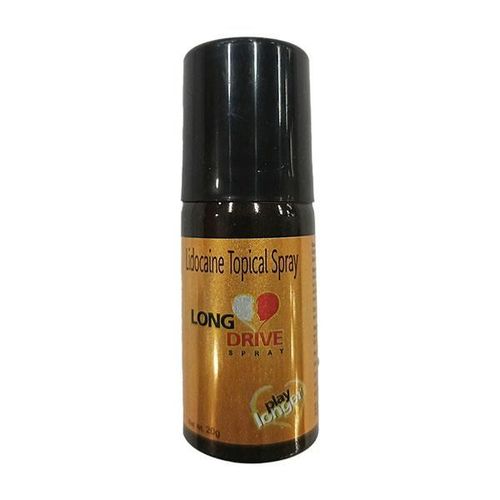
by Pontika Aerotech Limited· 20GM
SKU: 982023
You save ₹70 on this order
Inclusive of all taxes
LONG DRIVE SPRAY contains Lignocaine which belongs to the group of medicines
called Local Anaesthetics. It is used to cause numbness (loss of sensation) of
body parts at sites where it has been administered in the body. It relieves pain
and discomfort in the nose and throat following minor surgical procedures (such
as the removal of tonsils or adenoid glands).
It also anesthetizes the nose, throat, respiratory tract (lungs), or digestive
tract (stomach) prior to the insertion of catheters or certain diagnostic
instruments that are used for viewing parts of the body (such as bronchoscopy or
esophagoscopy).
It can be used to numb the oral cavity, manage gag reflux (vomiting sensation)
that occurs during dental procedures, and manage painful oral conditions (such
as oral injury, infection, or inflammation) by alleviating pain sensation. It
may also help in managing pain caused by episiotomy (tearing the skin between
the vagina and anus during childbirth).
Following the administration of LONG DRIVE SPRAY, avoid oral foods or chewing
gums for at least 1-2 hours or until sensation comes back. This is because you
may experience trouble swallowing or accidentally bite your tongue or cheek
muscles during this period. Do not drink water or other fluids after applying
LONG DRIVE SPRAY, as it may reduce its anaesthetic effects.
Before using LONG DRIVE SPRAY, inform your doctor if you have any liver, kidney,
or heart problems. You must also inform your doctor if you have low blood
pressure, a severe injury or bleeding in the nose, mouth, or throat, or epilepsy
before using LONG DRIVE SPRAY.
LONG DRIVE SPRAY should be used in pregnant or breastfeeding women only if it is
considered necessary by the physician. It is generally safe and well tolerated
without any major side effects. However, if you experience any irritation on the
application site or feel drowsy, consult your doctor for advice.
It is used to:
LONG DRIVE SPRAY is a local anaesthetic agent. It reduces pain sensation and
causes numbness in body parts by blocking the flow of certain ions (sodium ions)
through the nerves that cause pain sensation. As a result, it limits the
transfer of pain signals from the peripheral part of the body (i.e., the face,
hands, legs, abdomen, pelvis, or where the medicine has been applied) to the
brain, which ultimately leads to loss of sensation.
LONG DRIVE SPRAY should be used under proper medical supervision. It is usually
administered by the physician prior to the surgical or diagnostic procedures.
However, it may also be self-administered by the patient if instructed by the
doctor for temporary pain relief.
Shake the container before use. Prior to use, prime the medicine to release the
correct dose of medicine. Fix the extension tube if it is given in the package.
Hold the container with the extension tube or spray nozzle pointing towards the
areas of application. Press the button to release the spray. Leave a time gap of
2 seconds between each spray.
Your doctor will decide the correct dose, number of sprays, and duration of
therapy for you depending on your age, body weight, and health condition. Avoid
contact with LONG DRIVE SPRAY with your eyes.
Consult your doctor immediately if you experience any of the following side
effects after using LONG DRIVE SPRAY:
!### Dizziness Or Drowsiness
Avoid standing or walking while you are feeling dizzy. Try to rest and relax.
Get enough sleep. Consult your doctor if you continue to feel dizzy for a
prolonged period of time.
!### Pregnancy
Consult your doctorLONG DRIVE SPRAY should be used in pregnant women only if it is considered
necessary by the physician. Therefore, inform your doctor before using LONG
DRIVE SPRAY if you are pregnant or think you may be pregnant.
!### Breastfeeding
Consult your doctorLONG DRIVE SPRAY should be used for breastfeeding women only if it is considered
necessary by the physician. Therefore, inform your doctor before using LONG
DRIVE SPRAY if you are breastfeeding.
!### Driving and Using Machines
Use with CautionDo not drive or operate any heavy tools or machines if your abilities are
affected by LONG DRIVE SPRAY.
!### Kidney
Use with CautionLONG DRIVE SPRAY should be used with caution in patients with kidney problems.
Therefore, inform your doctor before using it.
!### Liver
Use with CautionLONG DRIVE SPRAY should be used with caution in patients with liver problems.
Therefore, inform your doctor before using it.
!### Allergy
Consult your doctorInform your doctor before using LONG DRIVE SPRAY if you are allergic to
lignocaine or to other local anaesthetics (such as bupivacaine or prilocaine).
!### Heart Disease
Use with CautionLONG DRIVE SPRAY should be used with caution in patients with heart diseases
(such as a slow heartbeat or very low blood pressure). Therefore, inform your
doctor before using it.
!### Use In Pediatrics
Consult your doctorLONG DRIVE SPRAY can be used in children and adolescents (aged between 3 and 18
years). It should be used in children aged below 3 years only if prescribed by
the physician. Your doctor will prescribe a suitable dose for your child based
on their age, body weight, health condition, and capacity for spitting and
swallowing. It is generally not used to soothe teething pain in infants.
However, consult your doctor for advice.
!### Use In Geriatrics
Use with CautionLONG DRIVE SPRAY should be used with caution with elderly patients. Your doctor
will prescribe the appropriate dose for you based on your age, body weight, and
sites where numbness is required in the body.
Before using LONG DRIVE SPRAY, inform your physician if you have:
A. Drug-Drug interactions:
Before using LONG DRIVE SPRAY, inform your doctor if you are taking any of the
following medicines, such as:
Overdosage:
If you accidentally ingested more LONG DRIVE SPRAY, contact your doctor
immediately or visit a nearby hospital immediately. If exposed to the eyes, wash
your eye with cold water or consult your doctor for advice.
| Drug | : | Lignocaine |
| Pharmacological Category | : | Voltage Gated Sodium Channel Blockers |
| Therapeutic Indication | : | Local anesthesia, Arrythmia |
| Dosage Forms | : | Injection, Gel, Cream, Ointment, Jelly, Topical Solution, Spray, Oral solution, Plaster |
Q: How long will it take for LONG DRIVE SPRAY to induce numbness?
A: It may take around 5 minutes for LONG DRIVE SPRAY to create numbness.
However, this period may vary from person-to-person based on the dose and amount
of LONG DRIVE SPRAY that is administered to you.
Q: How long do the effects of LONG DRIVE SPRAY last in the body?
A: The effects of LONG DRIVE SPRAY may last from 20–30 minutes up to 1 hour
after application. However, the recovery period may vary from person-to-person
based on the dose and amount of the LONG DRIVE SPRAY applied.
Q:What is the use of LONG DRIVE SPRAY?
A: LONG DRIVE SPRAY is used to cause numbness of the oral cavity, respiratory
tract, and digestive tract, which may be helpful in reducing pain, inflammation,
or discomfort of the mouth, throat, or esophagus, reducing gagging during dental
procedures, and causing loss of sensation in patients prior to the insertion of
a catheter or instruments meant for diagnostic procedures (such as bronchoscopy
or esophagoscopy). It may also help in reducing pain caused by an episiotomy.
Q: How do I use LONG DRIVE SPRAY?
A: LONG DRIVE SPRAY should be used under proper medical supervision. It is
usually administered by the physician prior to the surgical or diagnostic
procedures. However, it may also be self-administered by the patient if
instructed by the doctor for temporary pain relief. Shake the container before
use. Prior to use, prime the medicine to release the correct dose of medicine.
Fix the extension tube if it is given in the package. Hold the container with
the extension tube or spray nozzle pointing towards the areas of application.
Press the button to release the spray. Leave a time gap of 2 seconds between
each spray.
Q: Can LONG DRIVE SPRAY be used with children?
A: Yes. LONG DRIVE SPRAY can be used in children and adolescents (aged between 3
and 18 years). It should be used in children aged below 3 years only if
prescribed by the physician.
Q: Can you drink water after consuming LONG DRIVE SPRAY?
A: Avoid eating foods or drinking water or other fluids after applying LONG
DRIVE SPRAY, as it may reduce its anaesthetic effects.
Q: How often can we use LONG DRIVE SPRAY?
A: LONG DRIVE SPRAY should be used as instructed by the doctor. Your doctor will
decide the duration of therapy for you depending upon your age, body weight,
health condition, and sites where numbness is required in the body.
Q: Can LONG DRIVE SPRAY be used in infants?
A: LONG DRIVE SPRAY should be used in children aged below 3 years only if
prescribed by the physician. Therefore, consult your doctor for advice before
use.
Q: Will LONG DRIVE SPRAY cause sleepiness?
A: LONG DRIVE SPRAY may cause sleepiness when used more than the recommended
dosage. It may also happen if you apply this medicine more frequently over a
shorter period of time. In such cases, consult your doctor for advice.
Q: Can LONG DRIVE SPRAY be used to reduce gagging?
A: LONG DRIVE SPRAY is used to manage gagging sensations during dental
procedures.
Q: What if I accidentally exposed LONG DRIVE SPRAY to the eye?
A: Use lukewarm water to gently wash the outer surface of the eye in case of
accidental contact with LONG DRIVE SPRAY. If the discomfort in the eye persists,
contact your doctor or visit a nearby hospital immediately.


