
Rx11% OFF

₹78₹88.13
View DetailsLoading...
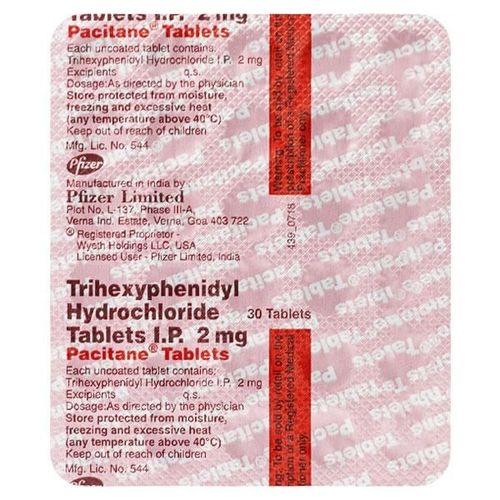
by Pfizer Limited· 30S
SKU: 113720
You save ₹6 on this order
Inclusive of all taxes
Pacitane 2mg Tablet is a commonly prescribed medicine containing
Trihexyphenidyl, which belongs to the class of anticholinergic agents. It is
often considered in situations where individuals experience involuntary body
movements, muscle stiffness, or tremors, either due to certain neurological
conditions or as side effects of psychiatric medications. Pacitane helps by
restoring the balance of specific brain chemicals involved in motor control,
offering support in managing physical discomforts that interfere with daily
movement and coordination.
Pacitane 2mg is usually recommended for patients dealing with extrapyramidal
symptoms such as rigidity, spasms, or tremors associated with Parkinsonism or
due to certain antipsychotic therapies. It may also be beneficial in helping
users improve body coordination and reduce stiffness caused by nervous system
imbalances. The medicine is typically taken once or twice a day, preferably at
the same time each day, and may be taken with or without meals, depending on
individual tolerance. Taking it after food may help reduce the chances of
stomach discomfort.
While taking Pacitane 2mg, patients are advised to follow a fixed dosing
schedule and avoid abrupt discontinuation unless guided by a healthcare
provider. Common precautions include staying hydrated, especially in hot
weather, and being cautious during activities like driving, due to the
possibility of drowsiness or blurred vision. Individuals with glaucoma, urinary
retention, or certain heart conditions should inform their doctor before using
this medicine. Monitoring is also important if taken alongside other
neurological or psychiatric medications.
Use of Pacitane 2mg in pregnancy and breastfeeding should only be considered
under the supervision of a medical professional. Some of the frequently observed
side effects may include dry mouth, dizziness, blurred vision, or mild
constipation. If these symptoms persist or worsen, a healthcare provider should
be consulted for advice. This medicine is part of a carefully managed care plan,
and patients are encouraged to maintain good hydration, a balanced diet, and a
consistent physical activity routine to support better results during its use.
Pacitane 2mg may be advised to help reduce muscle stiffness linked to certain
neurological or medicine-related conditions. It works by balancing specific
brain chemicals that control muscle tone and movement. This can help improve
flexibility and ease difficulty in body movement, especially when stiffness
interferes with daily tasks. It is commonly included in long-term care plans
involving neuromuscular coordination support.
In some cases, Pacitane is used when individuals experience uncontrolled or
jerky movements because of other medicines, such as antipsychotics. It helps
manage these involuntary muscle movements by modifying nerve signals in the
brain. This action helps in regaining better control over motor responses and
reducing discomfort caused by sudden muscle activity.
Pacitane 2mg may be included in neurological care routines to support better
coordination in people who have trouble with smooth, purposeful movements. It
helps by relaxing overactive muscles and easing tension that interferes with
controlled physical actions. As muscle control improves, patients may find
better balance, posture, and coordination in regular movements like walking or
writing.
Pacitane 2mg contains Trihexyphenidyl, which belongs to a class of medicines
called anticholinergics. It works by blocking the action of a natural chemical
called acetylcholine in the brain. Acetylcholine plays a key role in regulating
muscle movement. By reducing its effect, Pacitane helps restore the balance
between brain chemicals, supporting smoother and more controlled muscle
activity.
Pacitane 2mg is often included in care plans where individuals experience muscle
stiffness, spasms, or tremors, particularly due to certain neurological
conditions or medication effects. It supports muscle control by relaxing overly
tense muscles and minimizing involuntary movements. This can lead to improved
mobility and more coordinated motor function during daily activities.
Pacitane 2mg influences how nerve signals are transmitted in the brain and
spinal cord. By regulating these signals, it helps reduce erratic or
uncoordinated muscle responses. As a result, users may notice better movement
coordination, balance, and reduced shakiness. This effect can be especially
useful in managing symptoms related to neuromuscular imbalances.
If you or anyone else accidentally took more PACITANE 2MG TABLET, consult your
doctor immediately or visit the nearby hospital. Symptoms of overdose might
include anxiety, depression, and behavioural changes.
When to Seek Medical Attention?
Stop taking PACITANE 2MG TABLET and contact your doctor immediately if you
experience any of the following side effects:
!### Constipation
!### Dizziness Or Drowsiness
!### Dry Mouth
!### Nausea And Vomiting
!### Pregnancy
ContraindicatedPACITANE 2MG TABLET is not recommended for use in pregnant women. Therefore,
consult your doctor before taking it.
!### Breastfeeding
ContraindicatedPACITANE 2MG TABLET is not recommended for use in breastfeeding women.
Therefore, consult your doctor before taking it.
!### Driving and Using Machines
Use with CautionDo not drive or operate any machines if you feel dizzy after taking PACITANE 2MG
TABLET.
!### Alcohol
Consult your doctorAvoid consum
!### Kidney
Use with CautionPACITANE 2MG TABLET should be used with caution in patients with kidney
problems. Therefore, consult your doctor before taking it.
!### Liver
Use with CautionPACITANE 2MG TABLET should be used with caution in patients with liver problems.
Therefore, consult your doctor before taking it.
!### Allergy
ContraindicatedDo not take PACITANE 2MG TABLET if you are allergic to PACITANE 2MG TABLET.
!### Heart Disease
Use with CautionPACITANE 2MG TABLET should be used with caution in patients with heart problems
(such as high blood pressure). Therefore, consult your doctor before taking it.
!### Use In Pediatrics
Use with CautionPACITANE 2MG TABLET should be used with caution in children and adolescents
(below 18 years). Therefore, consult your doctor before taking it.
!### Use In Geriatrics
Use with CautionPACITANE 2MG TABLET should be used with caution in elderly patients (aged 65
years or above). Therefore, consult your doctor before taking it.
Before taking PACITANE 2MG TABLET, inform your doctor if you:
Drug:Trihexyphenidyl
Pharmacological Category:Antimuscarinic agents
Therapeutic Indication:Abnormal muscle movements
Dosage Forms:Tablet, Injection
particularly those caused by certain medications. Syndopa Tablet is commonly
used to manage symptoms associated with Parkinson’s disease.
Active Ingredient: Pacitane contains Trihexyphenidyl. Syndopa contains
a combination of Levodopa and Carbidopa.
Mech
the brain to help control muscle activity and reduce stiffness or tremors.
Syndopa works by increasing dopamine levels in the brain, helping improve
movement control and reduce Parkinson’s symptoms.
Common Prescri
tremors, stiffness, and muscle rigidity caused by psychiatric or neurological
medicines. Syndopa is mainly prescribed for Parkinson’s disease, tremors, and
muscle rigidity related to dopamine deficiency.
Onset of Action: Pacitane usually shows gradual improvement, and effects
may be noticed over time. Syndopa often provides noticeable improvement
within a few days of starting treatment.
Common Side Effects: Pacitane may cause dry mouth, dizziness, blurred
vision, or mild drowsiness. Syndopa may cause nausea, sleepiness, or
involuntary movements in some patients.
Patient Suitability: Pacitane is often used alongside psychiatric or
neurological medications to control side effects such as tremors or stiffness.
Syndopa is typically used for patients with Parkinson’s disease or related
movement disorders.
Dosage Frequency: Pacitane dosage varies depending on the condition and
is usually taken one to three times daily as prescribed. Syndopa is generally
taken two to four times a day based on the patient’s condition and medical
advice.
Amantrel Tablet contains Amantadine Hydrochloride.
Main Use: Pacitane is commonly used to help control drug-induced tremors
and stiffness. Amantrel is often recommended for tremors and movement
symptoms associated with Parkinson’s disease.
Mech
reduce involuntary muscle movements and stiffness. Amantrel helps increase
dopamine release in the brain and blocks its reuptake, improving motor control.
Ideal For: Pacitane is best suited for tremors linked to psychiatric or
antipsychotic medication use. Amantrel is often preferred for tremors in
early-stage Parkinson’s disease and related conditions.
Effect on Tremors: Pacitane may help reduce stiffness and tremors in
certain neurological conditions. Amantrel may ease tremors, improve movement,
and reduce fatigue in Parkinson’s care.
Common Side Effects: Pacitane may cause dry mouth, drowsiness,
constipation, or blurred vision. Amantrel may cause dizziness, swelling,
sleep disturbances, or nervousness.
Dosing Frequency: Pacitane is usually taken one to three times per day
based on medical advice. Amantrel is generally taken once or twice daily
depending on the condition.
Special Notes: Pacitane is often prescribed as part of combination
therapy with other neurological or psychiatric medicines. Amantrel may also
help manage fatigue and movement-related symptoms in Parkinson’s treatment
plans.
A: Pacitane 2mg Tablet is used to treat symptoms of Parkinson’s disease, such as
tremors, muscle stiffness and poor muscle control. It is also prescribed to
manage movement disorders caused by certain medications, especially
antipsychotic drugs.
A: Yes, Pacitane can slow down digestion and may cause constipation. Drink
plenty of water and eat fiber-rich foods. Ask your doctor for suitable remedies
if needed.
A: Inform your doctor about all health issues, especially glaucoma, urinary
problems, or liver issues. Stay hydrated, avoid overheating, and follow up
regularly.
A: Pacitane is generally not the first choice for children and is only given if
advised by a doctor. It requires careful dose adjustment and close monitoring.
A: Pacitane itself is not a psychiatric medicine but is used to manage movement
side effects caused by certain mental health medicines. It supports better
tolerance to long-term therapy.
A: Pacitane helps relax muscles in specific neurological conditions, but it is
not a general medicine for muscle cramps. Your doctor will decide if it is
suitable based on your condition.
A: Always inform your doctor about any medicines you're taking. Some medicines,
especially psychiatric or sleep-related ones, may interact with Pacitane. Your
doctor will adjust doses if needed.
A: Yes, Pacitane may cause drowsiness or dizziness in some people. Avoid driving
or handling heavy machines until you know how the tablet affects you. Take care
when combining it with other medicines that cause sleepiness.
A: It is better to take Pacitane after food, as this reduces chances of stomach
discomfort. Taking it with meals also helps in better absor
If your doctor has advised otherwise, follow their instructions.
A: You may notice improvement in symptoms within a few days, but full benefits
might take 1 to 2 weeks. Consistent use is key for best results. Let your doctor
know if you don’t see improvement or experience side effects.
A: Yes, some people may notice blurred vision or difficulty focusing. This
usually goes away as your body adjusts. Inform your doctor if it continues or
gets worse.


