
Rx12% OFF
₹528₹600
View DetailsLoading...
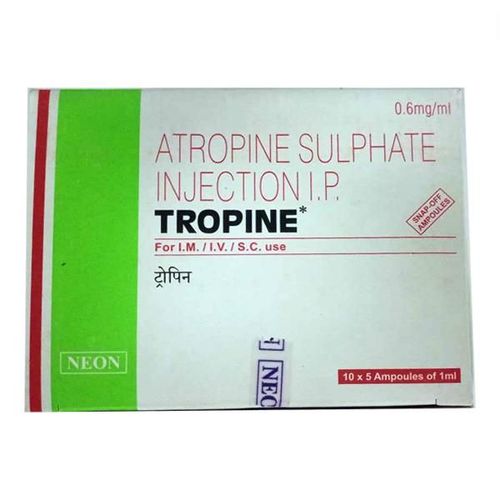
by Neon Laboratories Ltd· 1ML
SKU: 345604
You save ₹1 on this order
Inclusive of all taxes
TROPINE contains Atropine which belongs to the group of medicines called
Anti-cholinergic drugs. It is used to restore normal heartbeat during an event
of cardiac arrest (heart stops working suddenly). It is often used as a
preanesthetic medication to manage the risk of sudden decrease in heartbeat and
to reduce saliva secretions during surgical procedures. It can also be used in
the poisoning caused due to certain substances like insecticides or mushrooms.
It is used in combination with other medicines to reverse the effects of certain
muscle relaxants (like vecuronium, rocuronium) given during surgery. It can also
reduce the overactivity of certain medicines (muscle relaxants) used in the
management of severe muscle disorders like myasthenia gravis.
Atropine is an antimuscarinic agent. It works by blocking the effects of a
neurotransmitter called acetylcholine, which is responsible for causing
contraction of muscles, increase in body secretions, and decrease in heart rate.
As a result, it leads to stimulation of muscles, increase in heart rate, and
decrease in body secretions.
TROPINE is not recommended for use in patients suffering from closed-angle
glaucoma (increased eye pressure), an enlarged prostate, myasthenia gravis, or
any obstruction of gut. If you are pregnant or breastfeeding, consult your
doctor for advice before receiving TROPINE. The most common side effects of
TROPINE are dry mouth, reduced sweating, blurred vision, constipation, increased
heart rate and confusion. Consult your doctor if any of the symptom worsens.
It is used:
TROPINE is an antimuscarinic agent. It effectively restores cardiac activity and
body function by blocking the effects of a neurotransmitter called acetylcholine
in the body which is responsible for various physiological functions (such as
contraction of skeletal or smooth muscles, increase in body secretions or bowel
movements, and decrease in heart rate). As a result, TROPINE stimulates skeletal
muscles, increases heart rate and reduces body secretions (such saliva, sweat,
bronchial and intestinal secretion) and bowel movements. This helps in restoring
cardiac activity during fatal conditions like cardiac arrest or poisoning,
reduces salivary secretion during surgical procedures and stimulates muscle
movements by counteracting the effects of muscle relaxants.
TROPINE will be given to you only by a doctor or a nurse either into the vein
(intravenously), muscle (intramuscularly), under the skin (subcutaneously) or
into the trachea (via endotracheal tube). Your doctor will decide the correct
dose and duration for you depending upon your age, body weight, and disease
condition.
Consult your doctor if you experience any of the following side effects:
!### Constipation
Eat plenty of fiber rich foods such as fresh fruits, vegetables, and cereals and
drink plenty of water. Try to exercise more regularly. If you still feel
constipated, consult your doctor for advice.
!### Dry Mouth
Drink plenty of water and fruit juices. Consume soft foods with higher water and
fiber content. Artificial saliva can also be used in case of extreme dryness of
mouth. Consult your doctor if you experience dryness of mouth for prolonged
period.
!### Pregnancy
Monitoring requiredTROPINE should not be used in pregnant women only if it is clearly necessary by
your doctor. Your doctor will prescribe TROPINE only if the benefits are greater
than any possible risk to the unborn baby. Therefore, consult your doctor before
receiving.
!### Breastfeeding
Monitoring requiredTROPINE should be used in breastfeeding mothers only if it is clearly necessary
by your doctor. Your doctor will prescribe TROPINE only if the benefits are
greater than any possible risk to the breastfeeding infant. Therefore, consult
your doctor before receiving.
!### Driving and Using Machines
Use with CautionDo not drive or operate any machines if your ability is affected by TROPINE.
!### Alcohol
Consult your doctorAvoid consum
dizziness and drowsiness.
!### Kidney
Use with CautionTROPINE should be used with caution in patients with kidney diseases. Consult
your doctor before receiving.
!### Liver
Use with CautionTROPINE should be used with caution in patients with liver diseases. Consult
your doctor before receiving.
!### Allergy
ContraindicatedDo not receive TROPINE if you are allergic to Atropine.
!### Lungs
Use with CautionTROPINE should be taken with caution in patients having chronic pulmonary
disease (airflow to the lungs becomes restricted leading to cough and
breathlessness). Therefore, consult your doctor before receiving it.
!### Heart Disease
Use with CautionTROPINE should be used with caution in patients with heart diseases (such as
high blood pressure, fast or irregular heartbeat, angina, or heart failure) and
in patients who had a heart transplantation. Consult your doctor before
receiving.
!### Use In Pediatrics
Use with CautionTROPINE should be used with caution in children and adolescent (below 18 years),
especially if they suffer from fever or when surrounded by hot climate. Proper
dose adjustments and careful monitoring are required in such patients, as high
doses of TROPINE can cause CNS side effects.
!### Use In Geriatrics
Use with CautionTROPINE should be used with caution in elderly patients (65 years and above).
Consult your doctor before receiving.
TROPINE is not recommended for use if you:
Before receiving TROPINE, inform your doctor if you:
A. Drug-Drug interactions:
Before receiving TROPINE, inform your doctor if you are taking any of the
following medicines such as:
Overdosage:
TROPINE will be administered to you only by a doctor or a nurse in a hospital,
and so it is unlikely to receive an overdose. However, consult your doctor or
nurse if you experience any unpleasant symptoms such as dry mouth or burning
sensation in mouth, difficulty in swallowing, nausea, vomiting, skin rash, dry
or red skin, feeling sleepy, intolerance of light, high body temperature, high
blood pressure, irregular heart rate, breathing difficulties, restlessness,
hallucinations, severe confusion, excitement (delirium), or convulsions.
| Drug | : | Atropine |
| Pharmacological Category | : | Muscarinic Receptor Antagonists |
| Therapeutic Indication | : | Restores heartbeat, reduces body secretions Manages Bradycardia, Stimulates muscle function Used in poisoning conditions |
| Dosage Forms | : | Eye Drops, Eye Ointment, Injection |
A: Yes. [GBNKEYWORD can be used during emergency conditions like cardiac arrest
to restore normal heartbeat. It can also use to manage poisoning caused due to
insecticides or mushrooms.
A: Patients receiving TROPINE must inform their doctor about their pre-existing
disease conditions such as high blood pressure, coronary artery disease, angina,
chronic heart failure glaucoma, inflammation of the stomach and intestines or
blockade in the gut. Drink plenty of water or fluid after receiving TROPINE, as
it may lead to increased dryness of mouth. Avoid concomitant use of other heart
medicines with TROPINE without consulting your as it may increase the risk of
side effects.
A: Yes. TROPINE can be given into the trachea (via an endotracheal tube) if
necessary. It must be administrated only the doctor or nurse and cannot be
self-administered. Your doctor will decide the correct dose and suitable route
of administration for you depending upon the severity of your condition.
A: Yes. TROPINE is known to increase heart rate and is used to restore your
heart rate during emergency conditions like cardiac failure. TROPINE should be
used with caution in patients with high blood pressure, coronary artery disease,
and angina. Consult your doctor before receiving.
A: Yes. TROPINE restores normal heartbeat by increasing the blood pressure and
so, it must be used with caution among patients having heart diseases like high
blood pressure, chest pain or heart attack. Consult your doctor before
receiving.
A: TROPINE is generally not recommended for use in very young children. Your
doctor might suggest a low dose depending upon the child’s age and body weight.
Therefore, consult your doctor for advice.
A: Yes. TROPINE can cause dry skin in some individuals. It is caused due to
decreased secretion of sweat (anhidrosis). Patients who received TROPINE are
advised to keep their skin hydrated always. Apply moisturizer generously to
affected dry areas of the skin. Drink plenty of water to keep yourself hydrated.
Consult your doctor for advice if you experience excessive skin dryness.
A: Yes. TROPINE can cause dry mouth in some individuals. Drink plenty of water
and fruit juices. Consume soft foods with higher water and fiber content.
Artificial saliva can also be used in case of extreme dryness of mouth. Consult
your doctor if you experience dryness of mouth for prolonged period.


