
Rx22% OFF

₹38₹48.58
View DetailsLoading...
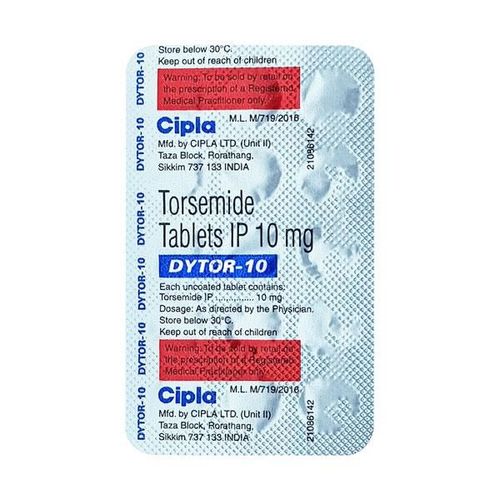
by Cipla Ltd· 15S
SKU: 800280
You save ₹14 on this order
Inclusive of all taxes
Dytor 10 Tablet contains torsemide, a diuretic medication used to reduce excess
fluid retention in the body (edema) caused by heart, liver, or kidney
conditions. It is also effective in managing high blood pressure.
It works by removing excess salts and fluids from the body (especially from the
kidneys, lungs, heart, stomach) in the form of urine which helps reduce swelling
caused by excess fluid buildup in conditions like heart failure, liver
cirrhosis, or kidney disorders.
Dytor 10 Tablet is usually taken once a day with or without food. Try to take
this medicine at the same time each day to help you remember. Take this medicine
exactly as suggested by your doctor. Do not take more tablets in one day without
consulting your doctor.
The active ingredient Torsemide present in the medicine controls high blood
pressure and edema but does not cure these conditions. Therefore, continue to
take this medicine even if you feel well. Do not stop taking Dytor 10 Tablet
without talking to your doctor.
Common Side Effects of Dytor 10 Tablet are dizziness or lightheadedness,
increased urination, low potassium levels, nausea or upset stomach or
electrolyte imbalance. Talk to your doctor if any of these side effects trouble
you.
Before taking Dytor 10 tablet, inform your doctor about all your pre-existing
disease conditions and medicines you currently take. Dytor 10 is not recommended
for use in pregnant and breastfeeding women.
As a diuretic medication, Dytor helps reduce fluid buildup in the body,
improving symptoms like swelling in the legs, ankles, and abdomen. It works by
increasing the kidneys' ability to eliminate excess salt and water.
By promoting the elimination of excess fluid and salt, Dytor tablet helps reduce
the overall blood volume, which lowers the pressure within the blood vessels.
For patients with high blood pressure, using Dytor in combination with lifestyle
changes and other prescribed medications can support effective blood pressure
management.
It works by removing excess fluid from the body, alleviating symptoms like
shortness of breath, swelling, and fatigue. As a diuretic, Dytor 10 helps
prevent fluid buildup in the lungs and other organs, thereby improving overall
heart function and patient comfort.
For patients with kidney disease, Dytor 10 Tablet plays a crucial role in
managing fluid retention and reducing swelling. Kidney dysfunction often leads
to the inability to effectively remove excess salt and water, causing edema. By
increasing urination, Dytor helps kidneys excrete excess fluid and reduce
swelling.
In patients with liver cirrhosis, Dytor 10 Tablet is often prescribed to help
manage fluid retention and ascites, a common complication of liver disease. The
diuretic action of Dytor 10 helps reduce abdominal swelling and prevents the
buildup of fluid in the abdominal cavity.
Dytor 10 Tablet contains an active ingredient called torsemide which is a
diuretic agent (water pill). It works by eliminating excess salt and fluid
accumulated in the body (due to kidney, liver and heart problems) via urine.
This helps relieve conditions like edema, high blood pressure, and fluid
retention due to heart, liver, or kidney diseases. By removing extra fluid,
Dytor helps lower the pressure in the blood vessels and organs, improving
overall health and comfort.
Take Dytor 10 Tablet exactly as advised by your physician. Do not increase or
decrease the dosage without consulting your physician.
No, you should not adjust the dosage of Dytor 10 Tablet on your own. Changing
the dose without consulting your doctor can lead to serious side effects,
including dehydration, low potassium levels, or electrolyte imbalances. If you
feel the current dose isn’t effective or causes unwanted effects, discuss it
with your doctor for proper evaluation and adjustment.
Your doctor will determine the safe maximum dose for your specific situation.
Taking doses higher than prescribed can lead to severe side effects and
complications.
Like all medicines, Dytor 10 Tablet may cause certain side effects in some
individuals, although not everybody gets them
Stop taking Dytor 10 Tablet and inform your doctor immediately if you experience
any of the following side effects
!### Pregnancy
Consult your doctorThere are no well adequate studies regarding the use of torsemide in pregnant
women.
the growing fetus cannot be excluded. Therefore, Dytor tablet should not be used
in pregnant women unless medically required. To manage your health condition
during pregnancy, your doctor will suggest an alternative BP medications and
heart medicines.
!### Breastfeeding
Use with CautionSafety and effectiveness of torsemide in breastfeeding women has not been
established yet as it is not known if the medicine is excreted in the
breastmilk. Therefore, Dytor Tablet should be used with caution in breastfeeding
women. Consult your doctor for advice.
!### Driving and Using Machines
Use with CautionDo not drive or operate any machines if you feel dizzy after taking Dytor
Tablet.
!### Alcohol
Consult your doctorAvoid consum
feel dizzy or drowsy.
!### Kidney
Consult your doctorDytor Tablet is not recommended for use in anuric patients (kidneys fail to
produce urine). It should be taken with caution in patients with kidney failure,
and severe urinary flow disorders. Regular check-ups for kidney function and
electrolytes balance are crucial in such patient to avoid complications.
!### Liver
Consult your doctorDytor Tablet should be taken with caution in patients with liver diseases like
cirrhosis and ascites. Proper dosage adjustments and careful monitoring are
required in such patients. Therefore, consult your doctor before use.
!### Allergy
ContraindicatedDo not take Dytor Tablet if you are allergic to Torsemide or to any of the other
ingredients of this medicine.
!### Heart Disease
Use with CautionDytor Tablet should be used with caution in patients with heart failure.
Therefore, inform your doctor all your pre-existing heart conditions as a
precaution before taking Dytor 10.
ContraindicatedDytor Tablet is generally not recommended for use in children aged below 18
years due to lack of safety data. To get personalised advice, consult your
doctor. Your child’s doctor may evaluate the risks and benefits of therapy
before prescribing it to your child.
!### Use In Geriatrics
Use with CautionDytor tablet should be used with caution in elderly patient especially who have
pre-existing heart, liver or kidney problems. Take all the blood tests and scans
suggested by your doctor to ensure maximum safety.
Dytor Tablet is not recommended if you have:
Shotha/Edema: Time-Tested Ayurvedic Remedies To Get Relief From Painful Water
Retention
Looking to buy Dytor 10mg Tablet online? You can now easily order Dytor 10mg
from and have it delivered right to your doorstep.
1.Dytor 10 with ACE Inhibitors (e.g., Enalapril, Ramipril)
2.Dytor 10 with NSAIDs (e.g., Ibuprofen, Diclofenac)
Drug:Torsemide
Pharmacological Category:Pyridine-sulfonylurea diuretics
Therapeutic Indication: Oedema associated with congestive heart
failure, renal or hepatic disease and essential hypertension
Dosage Forms:Tablet, Injection
fast food, pickles, packaged snacks, and canned soups. Excess sodium encourages
water retention and swelling. Choose low-sodium alternatives and use herbs,
lemon, or spices instead of salt for flavor.
Stay Well Hydrated: Drink enough water throughout the day to maintain
proper fluid balance. Adequate hydration helps the body flush out excess sodium
and reduces fluid buildup.
Increase Potassium-Rich Foods: Include potassium-rich foods like bananas,
avocados, spinach, sweet potatoes, and coconut water. Potassium helps balance
sodium levels in the body and supports healthy fluid regulation.
Eat Natural Diuretic Foods: Add foods with natural diuretic properties
such as cucumber, watermelon, pineapple, celery, and asparagus. These help the
body remove excess fluid naturally.
Reduce Refined Carbohydrates and Sugar: Limit intake of white bread,
pastries, sugary snacks, and processed desserts. These foods can contribute to
fluid retention and bloating.
swimming can improve blood circulation and help reduce swelling.
Elevate Your Legs: Rest with your legs elevated above heart level for
20–30 minutes daily. This helps reduce fluid buildup in the lower limbs and
improves circulation.
Avoid Long Periods of Inactivity: Do not sit or stand in the same
position for extended periods. Take short breaks to stretch, walk, or perform
ankle rotations to promote blood flow.
Try Water-Based Activities: Aqua aerobics or walking in water can help
reduce swelling and are gentle on joints while improving circulation.
Always consult your doctor before starting new exercises, especially if swelling
is due to heart, kidney, or liver conditions.
Some commonly prescribed alternatives to Dytor 10mg tablet include:
Always consult your doctor before switching to any alternative medication.
Torsemide combined with Spironolactone.
Purpose: Dytor is used to treat fluid retention (edema) and high blood
pressure. Dytor Plus is used for fluid retention and high blood pressure,
especially when there is a risk of potassium loss.
Mech
increases urine production by acting on the kidneys and removing excess fluid.
Dytor Plus combines torsemide with spironolactone. While torsemide removes
excess fluid, spironolactone helps retain potassium and blocks aldosterone,
supporting fluid balance.
Potassium Loss Risk: Dytor has a higher risk of potassium loss due to its
diuretic action. Dytor Plus has a lower risk of potassium loss because
spironolactone helps conserve potassium.
Monitoring Required: Dytor requires regular monitoring of electrolytes,
kidney function, and blood pressure. Dytor Plus requires similar monitoring,
with additional attention to potassium levels due to spironolactone.
Furosemide.
Onset of Action: Dytor usually starts working within 1–2 hours. Lasix
generally starts working within about 1 hour.
Duration of Action: Dytor has a longer duration of action, typically
lasting 6–8 hours. Lasix has a shorter duration of action, usually around 4–6
hours.
Potency: Dytor is considered more potent and may remove fluid effectively
at lower doses. Lasix may require higher or repeated doses for similar fluid
removal.
Indications: Dytor is used for edema caused by heart, kidney, or liver
conditions and for hypertension. Lasix is also used for edema from similar
causes and is commonly used in acute conditions such as pulmonary edema.
Usage Frequency: Dytor is often taken once daily for chronic fluid
retention. Lasix may require multiple doses per day due to its shorter
duration.
Preferred Use: Dytor is generally preferred for long-term management of
chronic edema due to its longer action. Lasix is often preferred in acute
situations where rapid fluid removal is required.
A: Yes, Dytor 10 Tablet can be taken daily if prescribed by your doctor. It is
typically used to manage fluid retention (edema) and high blood pressure.
However, daily use must be monitored by your doctor to avoid potential side
effects like electrolyte imbalances or dehydration.
A: Dytor 10mg Tablet contains torsemide, a loop diuretic used to manage edema
caused by heart failure, kidney disorders, or liver cirrhosis. It also helps
lower high blood pressure by removing excess water and salt from the body,
reducing strain on the heart.
A: Yes, Dytor 10 is highly effective for managing heart failure by reducing
fluid buildup in the body. It helps alleviate symptoms such as swelling,
breathlessness, and fatigue, improving heart function and overall quality of
life.
A: The recommended dosage of Dytor 10mg varies based on the condition being
treated. For edema, the usual dose is 5-20 mg daily, while for hypertension, a
lower dose may be sufficient. Always follow your doctor's prescri
o
A: Dytor 10 Tablet may be taken daily as prescribed, but long-term use requires
regular monitoring of kidney function, electrolytes, and blood pressure to avoid
complications such as dehydration or electrolyte imbalances.
A: To manage high blood pressure, Dytor 10mg is usually taken once daily,
preferably in the morning to prevent frequent nighttime urination. It should be
taken exactly as directed by your doctor to achieve effective blood pressure
control.
A: Yes, Dytor 10mg Tablet can be taken with or without food. However, taking it
with food may help reduce stomach upset. Always follow your doctor's advice
regarding timing and dosage.
A: Dizziness is a common side effect of Dytor 10 mg due to its diuretic action,
which can lower blood pressure or cause dehydration. Staying hydrated and
avoiding sudden position changes can help minimize dizziness.
A: Yes, Dytor 10mg may cause dehydration if excessive fluid is removed from the
body. Symptoms include dry mouth, weakness, and low urine output. Drinking
adequate fluids and regular monitoring can help prevent dehydration.
A: To prevent side effects, take Dytor 10mg as prescribed, stay hydrated,
monitor electrolytes and kidney function regularly, and avoid high doses unless
advised by your doctor. Report any unusual symptoms immediately.
A: Yes, Dytor 10mg Tablet is widely used to manage heart failure by reducing
fluid overload, relieving symptoms like swelling and breathlessness, and
improving heart function.
A: Dytor 10mg can be used for long-term treatment under strict medical
supervision. Regular monitoring of electrolytes, kidney function, and blood
pressure is essential to ensure safety and effectiveness.
A: Dytor 10 mg is not typically recommended during pregnancy unless absolutely
necessary. Consult your doctor for alternative treatments or risk assessment if
you are pregnant or planning to conceive.
A: Dytor 10mg works by increasing urine production, helping the body eliminate
excess fluid and salt. This reduces swelling (edema) caused by conditions such
as heart failure, kidney disorders, or liver cirrhosis.
A: Dytor 10mg lowers blood pressure by removing excess water and salt from the
body, reducing the blood volume and strain on the heart, thereby improving
circulation.
A: Dytor is prescribed for heart failure patients to manage fluid retention,
reduce swelling, and alleviate symptoms like breathlessness and fatigue,
improving overall heart performance.
A: Yes, Dytor 10mg helps manage fluid buildup in liver cirrhosis by eliminating
excess water and salt, reducing swelling in the abdomen (ascites) and legs.
A: Dosage reduction of Dytor 10mg should only be done under medical supervision.
Your doctor will gradually adjust the dose based on your condition and
monitoring results to avoid rebound fluid retention or other complications.


